

Key Takeaways
- Most first-time filers need a W-2 or 1099 and a Social Security number to get started.
- The standard federal tax filing deadline is April 15; extensions are available but don't delay payment.
- Free filing options exist for many taxpayers through IRS-sponsored programs.
- Choosing the standard deduction is usually simpler and advantageous for most first-timers.
- A refund means you overpaid during the year - it is not a bonus from the government.
What you will need
What You Need to Know Before You Start
Filing a federal tax return for the first time can feel intimidating - the forms are unfamiliar, the terminology is dense, and the stakes feel high. But the core task is straightforward: you're telling the IRS how much you earned, calculating how much tax you owed on that income, and reconciling it against what was already withheld from your paychecks (or what you paid quarterly if self-employed).
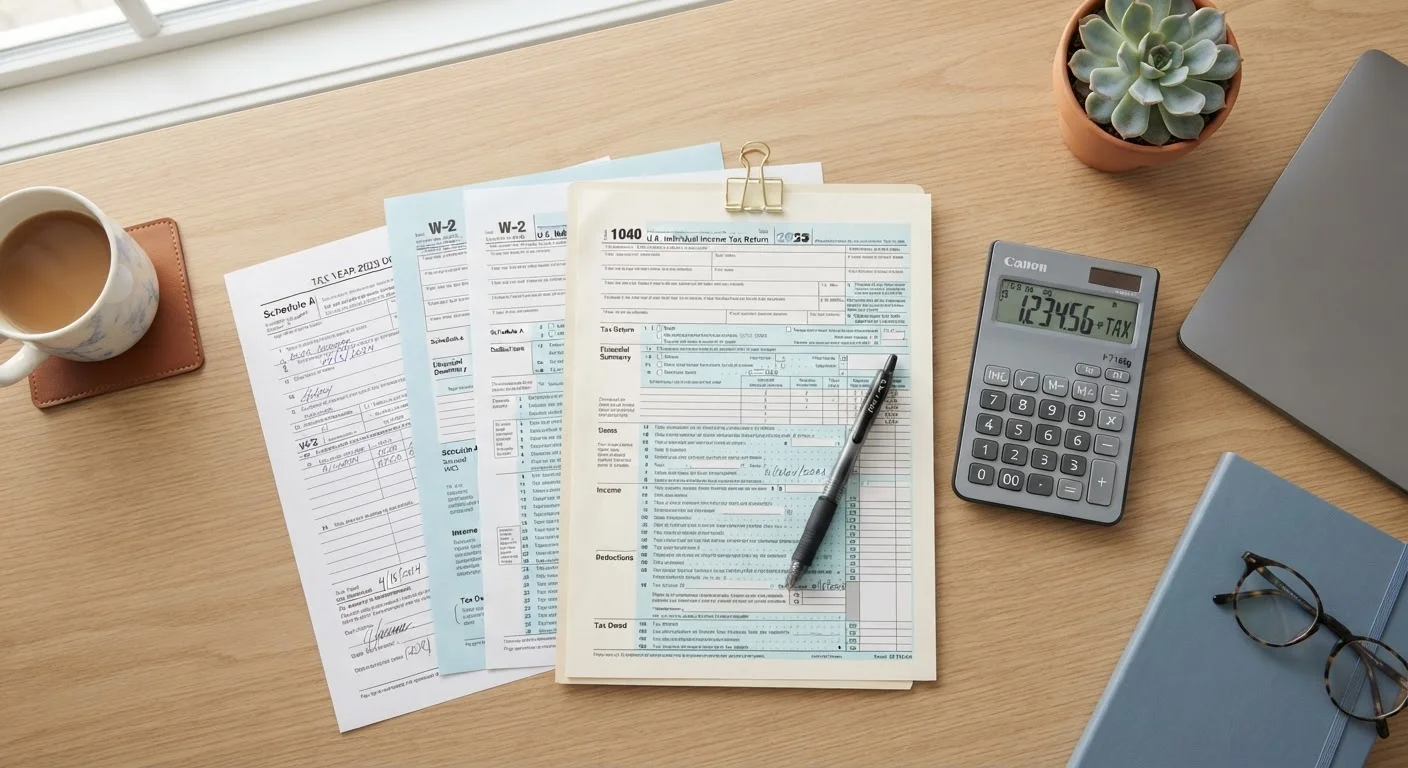
Before anything else, get familiar with the key forms involved. A W-2 is issued by employers and shows your total wages and taxes withheld. A 1099 covers other income types - freelance work, interest, dividends - and generally means no tax was withheld upfront. For a plain-language breakdown of these and related forms, see our tax form reference guide.
Most employers and financial institutions are required to send income documents by January 31, so you should have everything you need by early February. If a form doesn't arrive, contact the issuer directly before assuming it was lost.
What you will need
Tools and Filing Options
You have three broad options: file on paper, use tax software, or hire a tax professional. For most straightforward first-time returns - a single W-2, no dependents, no side income - guided tax software is the most practical choice. It walks you through each question, does the math automatically, and flags common errors before you submit.
IRS Free File
A free tax-preparation and e-filing service available to qualifying taxpayers through the IRS website - a solid starting point for many first-timers.
W-2 or 1099 Form
The income document(s) issued by your employer or clients that form the foundation of your tax return.
IRS Form 1040
The standard individual income tax return form used to report income, claim deductions, and calculate tax owed or your refund.
IRS Form 4868
Used to request an automatic six-month extension to file your return - does not extend the time to pay taxes owed.
Free Filing Is More Accessible Than You Think
The IRS Free File program offers no-cost guided tax software to taxpayers whose adjusted gross income falls below a certain threshold, which has historically covered a large share of first-time filers. Even if your income exceeds that threshold, the IRS offers Free File Fillable Forms - electronic versions of standard paper forms - at no cost. Check IRS.gov for current eligibility details before paying for commercial software.
Step-by-Step: Filing Your Return
Follow the steps below in order. Each one builds on the last. If anything is unclear mid-process, the IRS website (IRS.gov) is the authoritative source - not third-party blogs.
Gather All Income Documents
Collect every W-2 and 1099 you received for the tax year. If you had more than one job, you'll have multiple W-2s. Check that the employer identification number (EIN) on each form is legible - you'll need to enter it on your return.
Choose Your Filing Status
Your filing status affects your tax bracket and standard deduction. Most first-timers will file as Single unless they are married or support a qualifying dependent. The IRS provides a short interactive tool on its website to help you confirm the right status for your situation.
Decide Between Standard and Itemized Deductions
A deduction reduces the amount of income subject to tax. The standard deduction is a flat dollar amount set by the IRS each year based on your filing status. Itemizing means listing individual deductible expenses - mortgage interest, state taxes paid, charitable gifts - and only makes sense if your total itemized deductions exceed the standard deduction amount.
For most first-time filers, especially renters and those with uncomplicated finances, the standard deduction is the right choice. It's simpler and typically larger than what first-timers can itemize.
Enter Your Information Into the Return
Using your chosen filing method - software or paper Form 1040 - enter your personal information, income figures, and chosen deduction. Software will auto-calculate your adjusted gross income (AGI), taxable income, and the tax you owe based on the current rate schedule.
If you're using software, answer each question fully rather than skipping sections. Incomplete entries are a leading source of errors.
Review, Sign, and Submit
Before submitting, review every figure against your source documents. Confirm your name, SSN, and bank details (if requesting direct deposit) are correct. E-filing is faster and more secure than mailing a paper return - the IRS typically acknowledges receipt within 24 to 48 hours and issues refunds within 21 days for most straightforward returns.
Understanding Your Outcome
After submitting, you'll either owe money, get a refund, or break even. A refund means the government is returning taxes you overpaid during the year through paycheck withholding - it's not a windfall. Conversely, a balance due means your withholding came up short. Neither outcome is inherently good or bad; it's a calibration issue that can be adjusted for next year using your W-4 with your employer.
Double-Check Your Personal Information
Errors on your Social Security number, name spelling, or bank account details are among the most common reasons the IRS rejects returns or delays refunds. Review these fields carefully before submitting. A mismatch between the name on your return and IRS records can trigger processing delays that take weeks to resolve.
If you're also working on broader financial habits - like setting up a spending plan - the process of tracking your income for taxes pairs well with budgeting fundamentals. Our first household budget guide covers how to build a plan around the same income numbers you just pulled together.
This article is for general informational purposes only and does not constitute personalized tax, legal, or financial advice. Tax rules change regularly; verify current figures and deadlines at IRS.gov. Consult a qualified tax professional for guidance specific to your situation.