

| Recommended housing cost ceiling | 30% of gross income (Widely cited guideline in U.S. housing policy and personal finance) |
| Common budgeting frameworks | 50/30/20, zero-based, envelope method |
| Average U.S. household spending categories tracked | Roughly 14-20 distinct line items (General personal finance best practice) |
| Sinking fund purpose | Pre-saving for known irregular expenses |
| Emergency fund target | 3-6 months of essential expenses (Commonly cited by consumer financial educators) |
Why Categories Matter More Than the Math
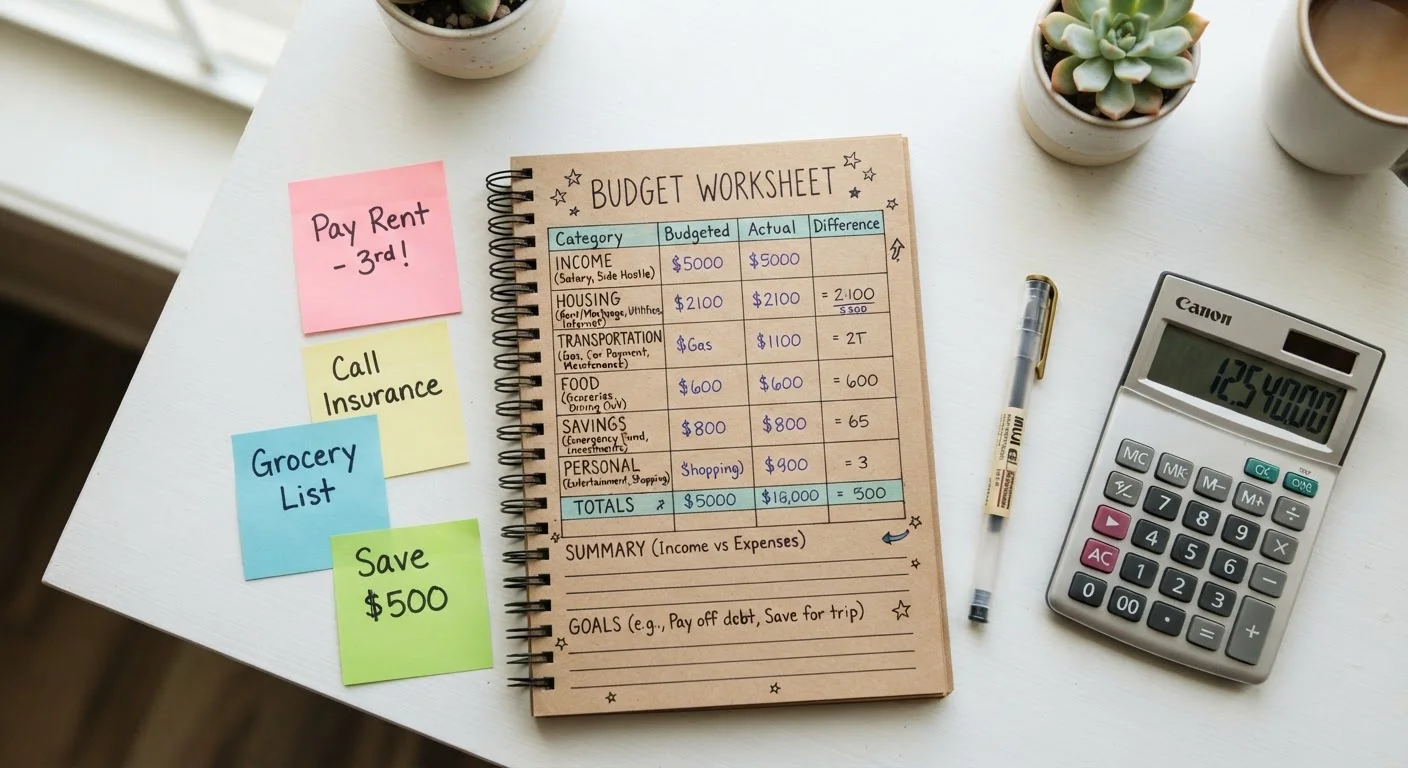
Most budgets don't fail because of bad arithmetic - they fail because a spending category was never accounted for. Car registration shows up in March. The dentist bill arrives in July. The holidays sneak up every single December. If the category isn't in your budget, the money quietly disappears and you wonder where it went.
A complete category list functions like a financial checklist: it prompts you to think about every area of spending before the money is gone. Whether you use a spreadsheet, an app, or a legal pad, the structure is the same. If you're just getting started, see our step-by-step guide to building your first household budget for help pulling your numbers together.
| Recommended housing cost ceiling | 30% of gross income (Widely cited guideline in U.S. housing policy and personal finance) |
| Common budgeting frameworks | 50/30/20, zero-based, envelope method |
| Average U.S. household spending categories tracked | Roughly 14-20 distinct line items (General personal finance best practice) |
| Sinking fund purpose | Pre-saving for known irregular expenses |
| Emergency fund target | 3-6 months of essential expenses (Commonly cited by consumer financial educators) |
The Core Budget Categories
Every household budget generally breaks down into a handful of major buckets. Within each bucket are the specific line items worth tracking separately.
Housing
- Rent or mortgage payment
- Property taxes (if not escrowed)
- Homeowner's or renter's insurance
- HOA fees
- Routine maintenance and repairs
Utilities
- Electric, gas, and water
- Trash collection
- Internet and cable or streaming
- Cell phone
Food
- Groceries
- Restaurants and takeout
- Coffee shops and work lunches
Transportation
- Car payment
- Auto insurance
- Gas and fuel
- Parking and tolls
- Public transit or rideshare
- Vehicle registration and inspection fees
- Oil changes and routine maintenance
If you're weighing whether a vehicle purchase fits your plan, check our overview on buying a vehicle before committing to a monthly payment.
Healthcare
- Health insurance premiums (if paid out of pocket)
- Dental and vision insurance
- Prescriptions and copays
- Medical devices or recurring health expenses
Personal and Family
- Clothing and shoes
- Haircuts and personal care products
- Child care, school fees, or extracurriculars
- Pet food, vet visits, and supplies
Fixed expense
A cost that stays the same each month, such as rent or a loan payment. Fixed expenses are easier to budget for because the amount doesn't change.
Variable expense
A cost that changes month to month, such as groceries or utility bills. Variable expenses require estimates based on past spending patterns.
Sinking fund
A dedicated savings pool you build up gradually for a known future expense - like holiday gifts or an annual car registration fee. You divide the expected cost by the number of months until it's due and set that amount aside monthly.
Discretionary income
Money left over after paying for necessities like housing, food, and utilities. Discretionary income funds wants, savings goals, and debt payoff beyond minimums.
Zero-based budget
A budgeting method where every dollar of income is assigned a purpose - expenses, savings, or debt - so that income minus all allocations equals zero. No dollar is left unaccounted for.
Categories People Forget-Until They Don't
These are the categories that sink otherwise solid budgets. They're real, recurring, and easy to overlook because they don't hit every month.
Irregular and Annual Expenses
- Holiday gifts and seasonal spending
- Birthdays and special occasions
- Annual subscriptions (software, memberships, clubs)
- Car registration and tabs
- Tax preparation fees
- Back-to-school supplies
The fix is straightforward: estimate the annual total, divide by 12, and set that amount aside each month in a dedicated savings bucket. This is sometimes called a sinking fund - money you're intentionally accumulating for a known future expense.
Savings and Financial Goals
- Emergency fund contributions
- Retirement savings (401(k) or IRA)
- Down payment or large purchase fund
- Vacation fund
- Debt payoff (beyond minimum payments)
Debt Payments
- Credit card minimum payments
- Student loans
- Personal loans
- Medical debt payment plans
Entertainment and Discretionary
- Hobbies and sports equipment
- Books, games, apps
- Concerts, movies, events
- Travel and hotels
For a plain-language breakdown of terms like discretionary income and fixed vs. variable expenses, our budgeting terms reference covers the vocabulary you'll encounter.
Once your category list is built, use the monthly budget review checklist at the end of each month to catch drift before it compounds. And if your first attempt doesn't hold together, here's why that's normal and what to adjust.
This article provides general financial education and is not personalized financial advice. Consider consulting a licensed financial professional for guidance specific to your situation.