

Key Takeaways
- The 3,000-mile oil change rule is outdated for most modern vehicles - many can go 5,000 to 10,000+ miles between changes.
- Your owner's manual, not a quick-lube sticker, is the authoritative source for your vehicle's oil change interval.
- Synthetic oil typically allows longer intervals than conventional oil, but driving conditions still matter.
- Oil life monitoring systems in newer cars calculate intervals based on actual engine data, not just mileage.
Why the 3,000-Mile Rule Has Outlived Its Era
For decades, the 3,000-mile oil change interval was gospel - plastered on stickers, recited by service advisors, and repeated across generations of drivers. The number made sense in an earlier era when engine tolerances were looser and conventional motor oil broke down faster. Today, it's largely obsolete for most passenger vehicles.
Modern engines are engineered with tighter tolerances, and oil formulations have advanced considerably. Full-synthetic and synthetic-blend oils are engineered to maintain viscosity and protective properties far longer than the mineral oils of the past. Most major automakers now specify intervals between 5,000 and 10,000 miles for vehicles using synthetic oil, and some specify even longer intervals under normal driving conditions.
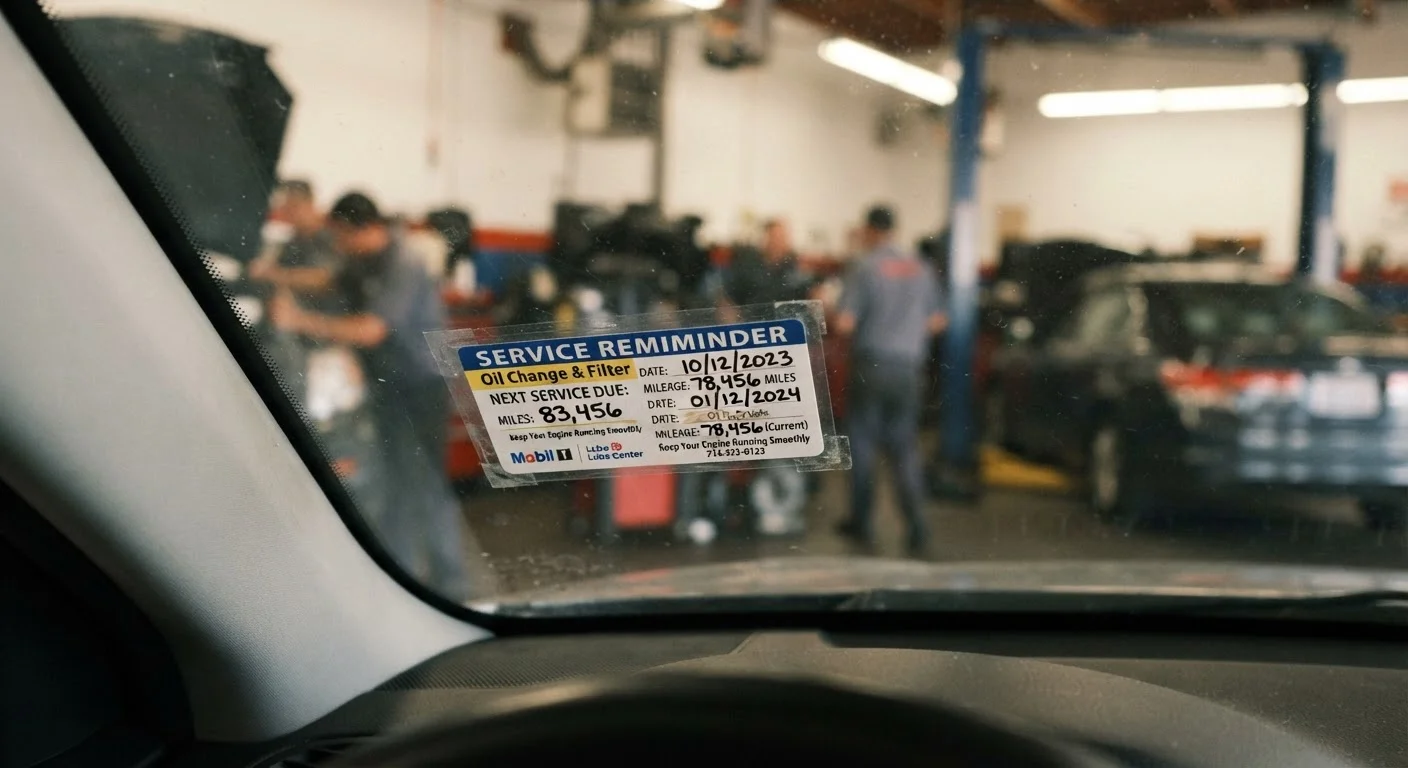
The sticker you see on your windshield after a service visit is typically placed by the shop - not your car's manufacturer. Service centers sometimes default to 3,000 miles as a conservative (and commercially convenient) recommendation, regardless of what your vehicle actually requires. For a fuller picture of how manufacturer-set intervals fit into your car's overall care, see your vehicle's maintenance schedule explained.
Myth
You must change your oil every 3,000 miles to protect your engine.
Fact
Most modern vehicles - especially those using synthetic oil - can safely go 5,000 to 10,000 miles or more between oil changes, per manufacturer specifications.
The 3,000-mile rule predates modern engine design and synthetic oil chemistry. Following it with a current vehicle doesn't improve engine health - it just increases your maintenance spending and generates unnecessary waste oil. Check your owner's manual for the interval your automaker actually recommends.
Myth
Dark-colored oil means it needs to be changed immediately.
Fact
Oil darkens as it does its job of suspending combustion byproducts - dark color alone is not a reliable indicator that oil has lost its protective properties.
Some oil additives cause darkening within a few hundred miles of use, particularly in diesel engines. While severely degraded oil may look and smell burnt, color is not a substitute for monitoring your oil life system or adhering to manufacturer intervals. If you're uncertain, a mechanic can assess oil condition more reliably.
Myth
Synthetic oil causes leaks in older engines, so you should avoid it.
Fact
Modern synthetic oils do not cause seals to leak; older engines may already have worn seals that become more apparent when thinner synthetic oil is used.
This misconception originated from early synthetic formulas that used esters incompatible with some seal materials. Current synthetic oils are formulated to be seal-compatible. If an older engine develops a leak after switching, the underlying issue is typically pre-existing seal wear - not the oil itself. Consult a mechanic before switching oil types in a high-mileage vehicle.
Myth
The sticker on your windshield is set by your car's manufacturer.
Fact
Windshield stickers are placed by the service shop, not the automaker, and often reflect the shop's standard practice rather than your vehicle's specifications.
Your car's manufacturer sets the recommended interval in the owner's manual and sometimes through the vehicle's oil life monitoring system. A shop may default to a conservative interval that serves their business model. Always cross-reference any sticker recommendation against what your owner's manual specifies for your engine and oil type. For more on how to read manufacturer-sourced vehicle documentation, see what window stickers and vehicle labels actually contain.
Myth
If your car isn't driven much, you don't need to change the oil.
Fact
Oil degrades over time through oxidation and moisture contamination, even when a vehicle sits unused - most manufacturers recommend changing oil at least once a year regardless of mileage.
Short-trip driving and extended storage are both classified as severe service conditions by many automakers. Moisture can accumulate in the oil from condensation, and additives break down with age rather than just use. Even if you drive far less than the mileage threshold, an annual oil change is generally advisable to protect internal engine components.
What Actually Determines When Your Oil Needs Changing
Oil change timing isn't one-size-fits-all. Three factors combine to set the right interval for your specific situation: the type of oil in your engine, the conditions you drive in, and your vehicle's built-in monitoring system.
5,000-10,000 mi
Typical synthetic oil change interval
Most major automakers specify this range for vehicles running full-synthetic oil under normal driving conditions, according to published owner's manuals.
~1 billion
Gallons of used motor oil generated in the U.S. annually
The U.S. EPA estimates approximately one billion gallons of used motor oil are generated each year, underscoring the environmental cost of unnecessarily frequent changes.
Oil Type Matters
Full-synthetic oil is engineered to resist thermal breakdown and oxidation longer than conventional oil. If your vehicle specifies synthetic, using it as directed allows you to safely extend the interval - but switching to synthetic in an older engine designed for conventional oil doesn't automatically reset the clock without consulting your owner's manual.
Severe vs. Normal Driving
Automakers define two driving condition categories: normal and severe. Severe conditions include frequent short trips (under 5 miles), stop-and-go city traffic, extreme heat or cold, towing, and dusty environments. If your daily commute fits that profile, your interval should be shorter - even if your odometer hasn't reached the standard threshold.
Oil Life Monitoring Systems
Many vehicles built in the last 15 years include an oil life monitoring system. These systems use algorithms that factor in engine temperature cycles, RPM data, load, and mileage to calculate when oil is genuinely degraded - not just how far you've driven. When your dashboard displays a percentage or a warning light, that's your car's actual recommendation. Trust it over a generic sticker.
This article is for general informational purposes only. Always consult your vehicle's owner's manual and a qualified mechanic for guidance specific to your car.